Two systems in production. One core underneath.
Pick a sector. See it running.
Sales in an insurance brokerage. The operative system of a nutrition practice. Different sectors, different rules, different channels — and exactly the same core doing the work underneath.
We didn’t build two products. We built one core.
The core doesn’t know about sectors — it knows about processes. It is already built, tested and running. The only thing that changes from one client to the next is the layer on top: your business logic, and the connections to the systems where your data already lives.
Qualification criteria, provider rates, follow-up cadence and contract steps.
Clinical history, dietary plan templates, consultation notes and appointment rules.
Never rebuilt for a client. This is what is already running in production today.
If it has an API, a database, or even a folder where files land, the core talks to it. Nothing gets migrated, and your data stays where it is.
Two sectors. One core technology.
Both are real systems, running today. Underneath, the mechanics are the same.
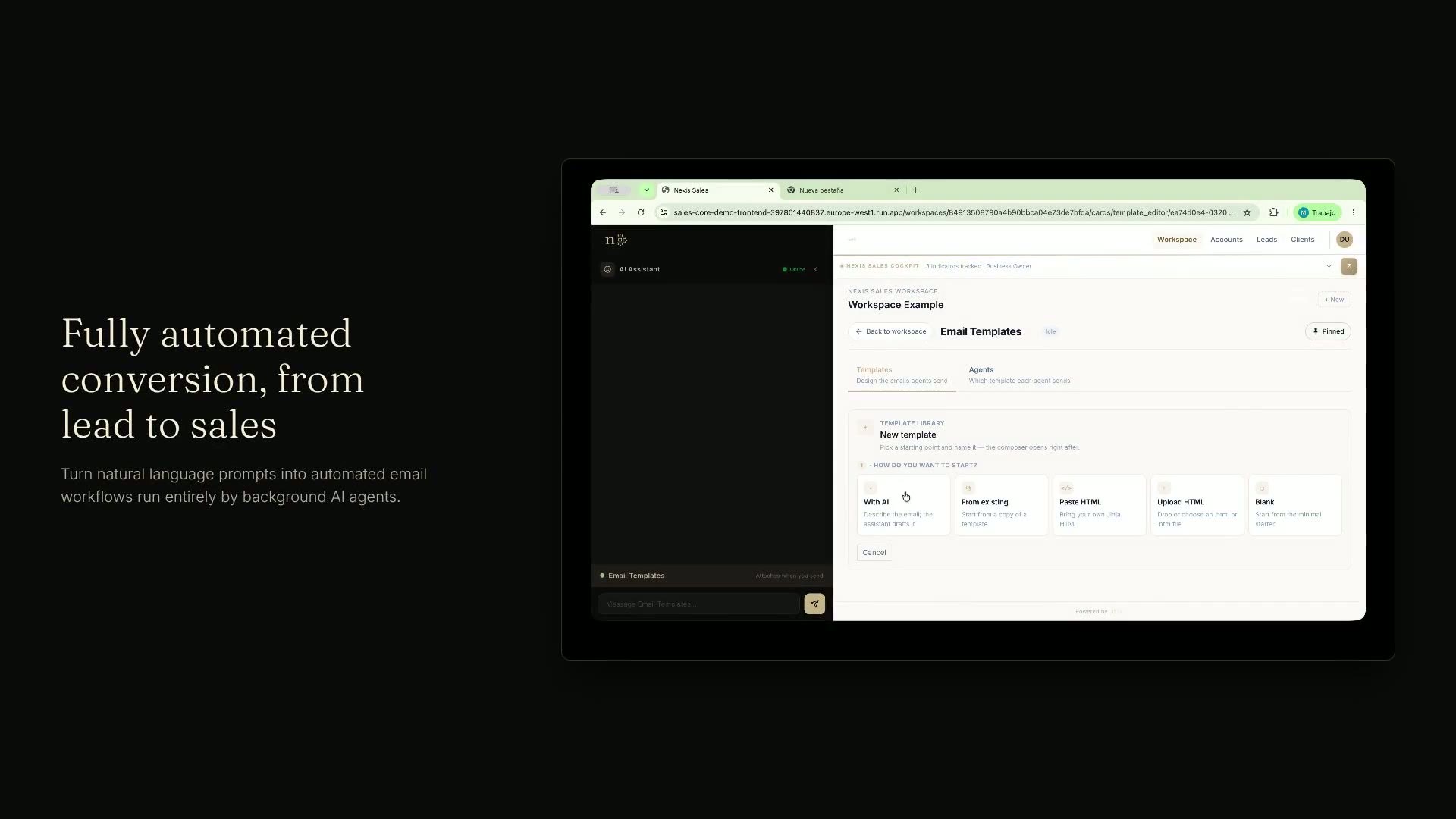
Automate the entire sales pipeline
Three agents run the pipeline inside the software you already have. A lead arrives, gets qualified, the quote goes out with a message written for that person, the follow-up chases on the day it is due, and the contract runs from the opening form to the welcome documentation.
- Three agents: Quote, Follow-up and Contract
- Triggers written in plain language, no flow editor
- Every action traceable in real time
- The sales cockpit: which lead is hot, and what needs a person today
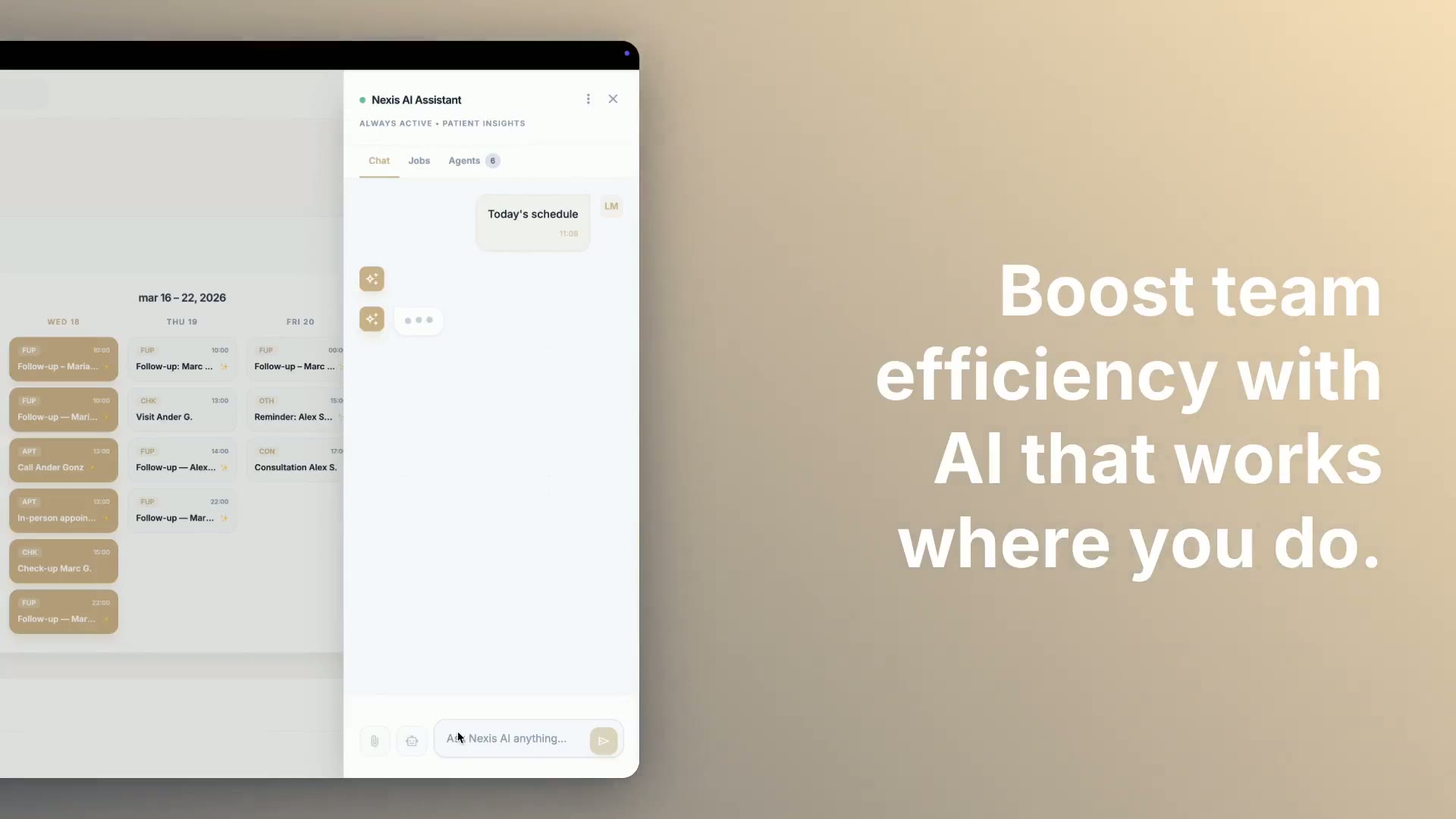
An AI assistant inside an operative system
A custom operative system built for a nutrition company: patient records, dietary plans and scheduling in one place, with an embedded assistant that drafts follow-ups, summarises consultations and pulls answers out of the full practice history in seconds. Autonomous workflows handle the repetitive admin in the background.
- Patient records, plans and scheduling, in one system
- The assistant drafts, summarises and searches the whole history
- Autonomous workflows for the repetitive admin
- Fewer hours on admin, more on patient care
We didn’t build a bespoke product. We built the tools that generate a bespoke system for each client.
Identical underneath. Different on top.
Side by side, this is the entire difference between the two systems.
| Layer | Sales agents | Nutrition system |
|---|---|---|
| The core | Identical | Identical |
| What it runs | Qualify → quote → chase → contract | Records, plans, consultations and scheduling |
| Business logic | Provider rates, qualification criteria, chase cadence | Clinical history, plan templates, appointment rules |
| Channels | Email, WhatsApp, web forms | The system itself, email, calendar |
| Integrations | CRM and provider rate APIs | Patient database and scheduling |
| Agents | Quote, Follow-up, Contract | Background admin workflows |
| The assistant | Hot leads, and what needs a person today | Consultation summaries and answers from the history |
| What had to be built | Business logic + APIs | Business logic + APIs |
The two highlighted rows are the thesis: the core is never touched, and the only thing built per client is the layer above it.
The third column is yours.
If a step in your operation can be described, it can be delegated. The core doesn’t care whether it is a policy, a patient, a property or a purchase order — it cares that the step repeats.
Your process, described
The way you’d explain it to somebody joining the team. No diagram needed.
Access to your systems
Wherever your data already lives: API, ERP, database or file. Nothing gets migrated.
The limits
What an agent may do on its own, and where it has to stop and ask you.